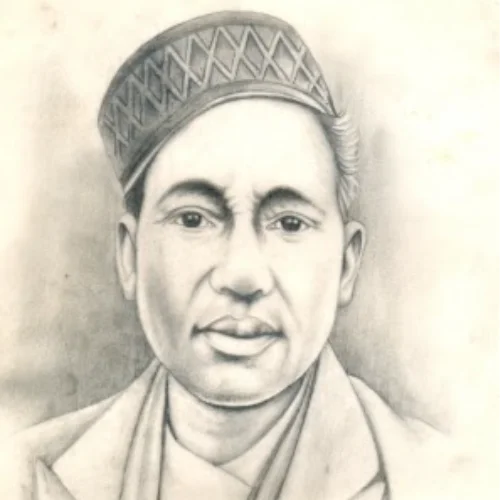
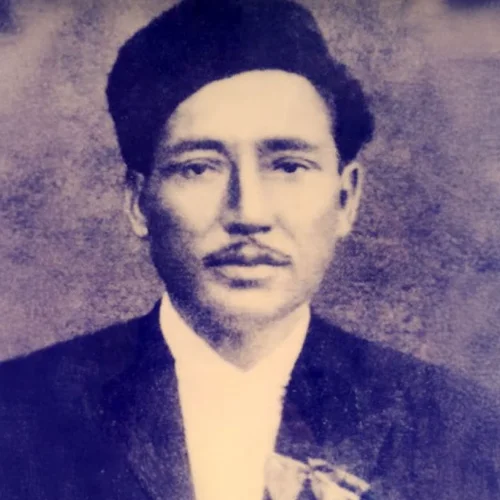
Master Mitrasen Thapa Magar (1895–1946) was a towering pioneer of Nepali folk music, literature, and social reform who famously left behind a military career to uplift the Gorkha community. Born in Bhagsu Cantonment (Dharamshala, India) to a family originally from Parbat, Nepal, he enlisted in the 1/1 Gorkha Rifles at age 16 and fought on the brutal European frontlines during World War I. Deeply affected by the horrors of war, he resigned from the British Indian Army in 1920 to dedicate his life to preserving Nepali music, language, and culture. Traveling widely across India and Nepal with only his harmonium, he captured the struggles, patriotism, and daily life of the diaspora, earning the respectful public title of "Master" for his artistic brilliance and communal service.
Mitrasen is legendary for recording nearly 100 timeless tracks onto gramophone discs in Kolkata during the late 1920s, bridging early recording technology with authentic village melodies. His iconic evergreen hits like "Lahure ko Relimai", "Aaba Ta Jau Kanchhi Ghara", and "Malai Khutrukai Paryo" remain deeply embedded in the cultural fabric of modern Nepalese society. Beyond music, he was an incredibly versatile dramatist, social worker, and author who founded the Himalayan Theatrical Company in 1926 and translated spiritual texts like the Buddhavani and Bhagavad Gita into simple, accessible Nepali to inspire social reform. Though he passed away at the young age of 50, his colossal impact is preserved today through postal stamps issued by both India and Nepal, a dedicated museum in Dharamshala, and the ongoing musical revivals of his centuries-old compositions.