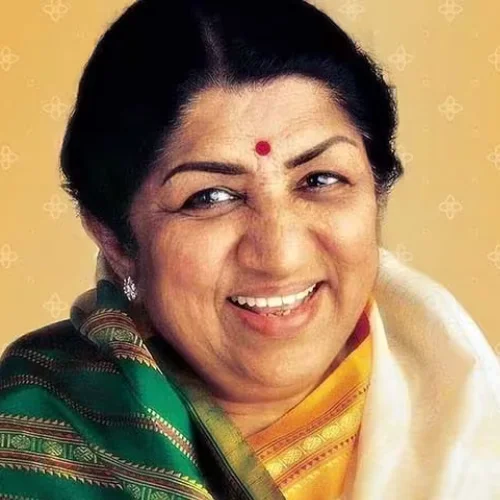
Lata Mangeshkar (28 September 1929 – 6 February 2022) was an iconic Indian playback singer and a cultural institution who profoundly shaped the sound of South Asian music. Revered worldwide, she was affectionately called the "Nightingale of India," "Voice of the Millennium," and "Queen of Melody". Over an extraordinary career spanning eight decades, she recorded tens of thousands of songs across 36 regional and foreign languages—primarily in Hindi, Bengali, and Marathi. Her voice became the musical identity for generations of Bollywood films, serving as the definitive lip-sync soundtrack for virtually every major Indian actress from the 1940s to the 2000s.
Lata Mangeshkar’s profound connection to Nepali music is anchored by her contribution to the historic 1966 film Maitighar, the first movie produced by Nepal's private sector. For this landmark project, she beautifully rendered the patriotic anthem “Jun Mato Ma Mero”. Remarkably, the song's lyrics were penned by the then King of Nepal, Mahendra Bir Bikram Shah Dev. Her soulful delivery of the royal poetry deeply resonated with the public, turning the track into a permanent national classic. Her impact on the film was so immense that Kathmandu’s famous Maitighar Mandala intersection was named directly after the movie.
Throughout her career, Mangeshkar remained a highly revered figure across generations of Nepali music lovers, bridging regional boundaries with her generational talent. Decades after her first Nepali recordings, she continued to enrich the country's musical landscape by collaborating with modern maestros. A prime example is the beloved duet “Bachunjelilai”, which she recorded with celebrated Nepali singer Ram Krishna Dhakal. When she passed away in 2022, Nepal’s President Bidya Devi Bhandari officially expressed nationwide grief, noting that Mangeshkar's sweet, melodic voice had permanently elevated and enriched Nepal’s cultural heritage.